
Introduction
Rice mills produce large quantities of rice husk every day. Traditionally, this agricultural waste was either dumped, burned openly, or disposed of inefficiently.
Modern Biomass Gasifier technology changes this completely by converting rice husk into producer gas, which is then used to generate electricity or industrial heat.
What is Rice Husk?
Rice husk is the outer shell removed during rice milling. It is lightweight, combustible, and rich in biomass energy.
Biomass Energy Potential
Rice husk contains significant calorific value, making it suitable for electricity generation using Biomass Gasifiers.
How Biomass Gasifiers Work
Biomass Gasifiers convert solid biomass fuel into combustible producer gas through a controlled thermal process called gasification.
Thermal Conversion
Biomass is heated in low oxygen conditions.
Producer Gas
Combustible gas powers engines and generators.
Renewable Energy
Waste becomes electricity and heat.
Benefits for Rice Mills
Reduced Diesel Costs
Rice mills reduce fuel expenses by replacing diesel generators with biomass electricity systems.
Waste Utilization
Agricultural waste becomes a valuable energy resource.
Sustainability
Renewable biomass energy reduces carbon emissions and environmental impact.
Fuel Cost Savings
| Energy Source | Monthly Cost | Sustainability |
|---|---|---|
| Diesel Generator | Very High | Low |
| Biomass Gasifier | Low | High |
Future of Rice Mill Renewable Energy
As energy prices continue to rise, more rice mills are expected to adopt renewable biomass energy technologies.
Biomass Gasifiers will play a major role in sustainable agro-industrial growth across India and global agricultural markets.
Why Rice Mills Choose Enersol Biopower
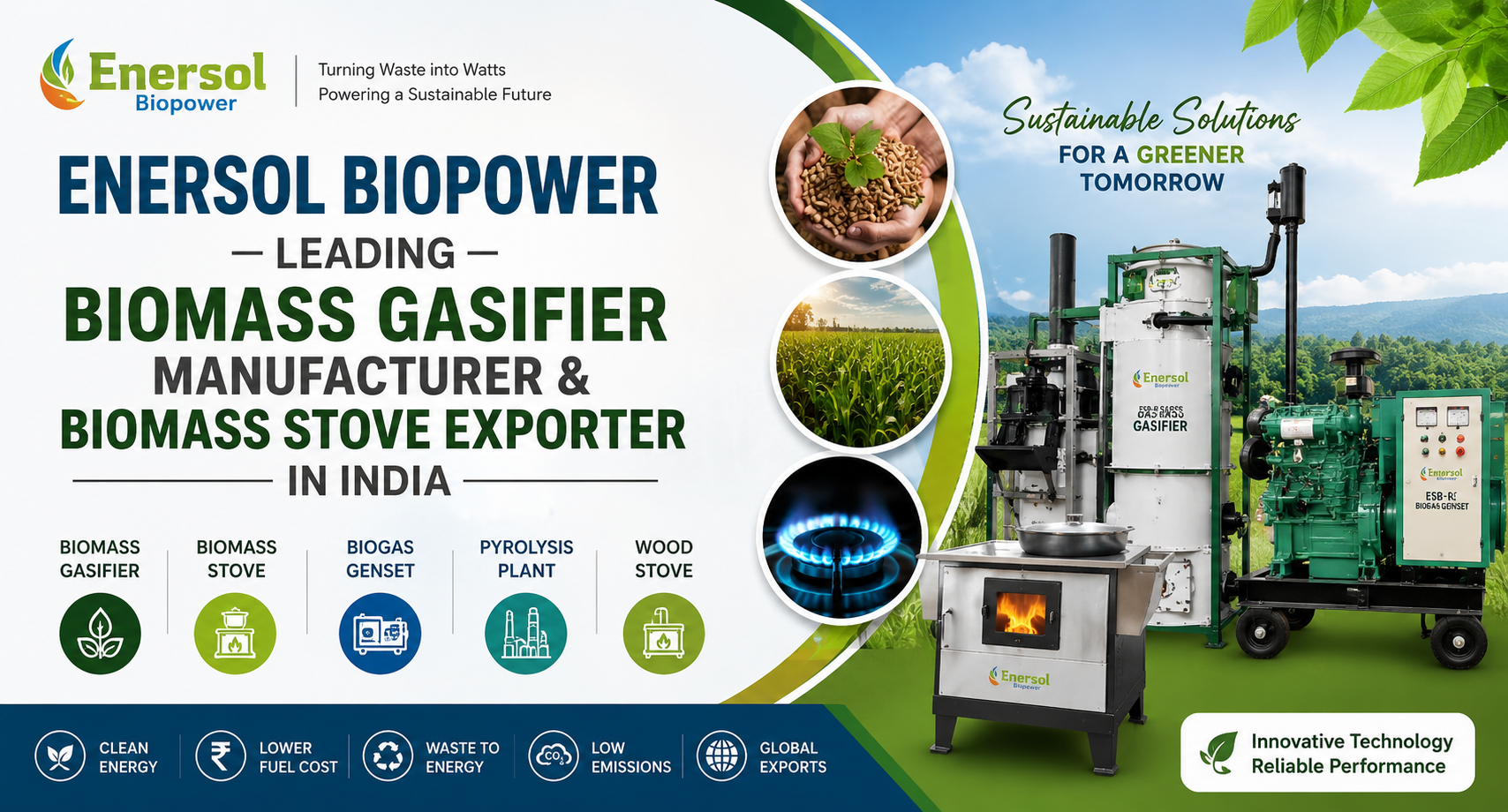
Rice mills across India generate enormous volumes of rice husk — a by-product that, when harnessed by a high-quality Biomass Gasifier, becomes the fuel for the mill's own electricity needs. Enersol Biopower, one of India's foremost Biomass Gasifier Manufacturers and a certified Biomass Gasifier Supplier in India, has deployed downdraft and fluidised-bed gasifier systems in rice mills ranging from small 5 kW installations for village-level hullers to 100 kW units for large commercial mills. Each system is engineered for continuous operation on rice husk, paddy straw, and other agro-residues generated on-site, eliminating diesel consumption entirely.
As a trusted Biomass Gasifier Exporter, Enersol Biopower has also supplied rice husk gasifier systems to mills in Ghana, Yemen, and Southeast Asia — demonstrating the global relevance of India-manufactured clean energy equipment. For mills producing large volumes of rice husk ash, Enersol Biopower's role as a Pyrolysis Plant Manufacturer and Pyrolysis Plant Supplier opens up an additional value chain: pyrolysis of rice husk produces high-silica biochar with commercial applications in construction materials, soil amendment, and industrial filtration media. Rice mill owners looking to complement gasification with on-site cooking or thermal process heat can also benefit from Enersol's Biomass Stove and Biomass Stove Exporter solutions, which handle smaller-scale thermal loads efficiently. As a Pyrolysis Plant Exporter, Enersol Biopower can deliver complete waste-to-energy systems for international rice processors as well.
Ready to Power Your Rice Mill with Renewable Energy?
Contact Enersol Biopower today for advanced Biomass Gasifier solutions for rice mills and agro industries.
Get Free Consultation
About the Author
Rai Singh Dahiya
Founder & Chief Innovator, Enersol Biopower Pvt. Ltd.
Grassroots innovator and recipient of India's Fifth National Grassroots Innovation Award (2009). Selected as Innovation Scholar-in-Residence at Rashtrapati Bhavan (2015). Over 25 years of experience pioneering clean biomass energy solutions deployed at IITs, NITs, and in UNDP international projects across Africa and the Middle East.