

Biomass Stove Purchase Checklist for Institutions
Before buying a biomass stove for a school, hostel or government kitchen, define your cooking load, write a clear specification, ask vendors for test reports, watch a live cooking demo and compare the total cost. This checklist takes you through each step.
By Rai Singh Dahiya, Founder, Enersol Biopower | Published 24 October 2026
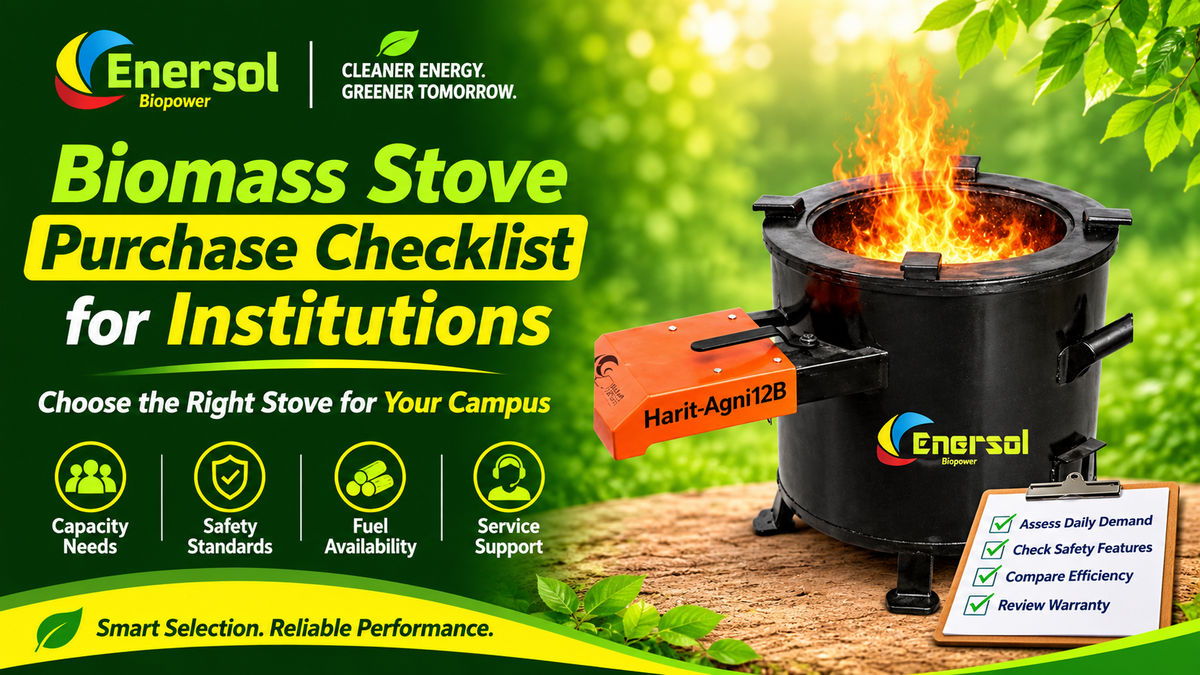
Key Article Highlights
- Define your peak load before you speak to any vendor
- Ask for a test report on the exact model being offered
- Watch a live demo with your own cooks, vessels and food
- Compare total cost, not just the purchase price
- Get installation, training, warranty and spares in writing
Step 1: Define Your Kitchen's Needs
Speak to your head cook and collect these facts first. They will shape everything that follows, and they give every vendor the same brief.
Your Kitchen Brief
- Meals: Peak meals per session and sessions per day
- Menu: What you boil, fry, roast or make rotis on
- Vessels: The size and weight of your largest full vessel
- Timing: How long you have to get a meal ready
- Current fuel: Monthly LPG, firewood or other fuel use and cost
- Biomass supply: What you can buy locally all year
- Power: Whether you have reliable electricity at cooking times
- Space: Kitchen size, floor strength, chimney route and fuel storage
Step 2: Write a Clear Specification
A clear specification helps you compare offers fairly. As a reference, here is how the main specifications look across part of Enersol's institutional range. All of the figures come from the product data for each model.
| Model | Heat Output (kcal/hr) | Biomass Use | Power | Weight |
|---|---|---|---|---|
| Green-Agnika10 | 12,500–25,000 | 5–10 kg/hr | 4" AC fan | 40–50 kg |
| Green-Magic15 | 30,000–62,500 | 12–25 kg/hr | 100W blower | 190–200 kg |
| Bio-Virat18 | 40,000–75,000 | 16–30 kg/hr | 165W blower | 220 kg |
| Bio-Akash21 | 50,000–87,500 | 20–35 kg/hr | 165W blower | 250–260 kg |
Your own specification should cover these points:
- Performance: Heat output, fuel use and thermal efficiency, with the test fuel named
- Fuel: Accepted fuels, size and moisture limit (for Enersol stoves, less than 20%)
- Control: How the cook raises and lowers the heat
- Build: Body material, firebox lining and pot support for your heaviest vessel
- Feeding and ash: Feeding method, and how ash is removed during cooking
- Exhaust: Chimney or hood arrangement
- Power: Load and backup option
Step 3: Ask Vendors the Right Questions
Send every vendor the same list and ask for written replies. Vague answers often tell you as much as the answers themselves.
Proof of Performance
- Do you have a recognised lab's test report for this exact model?
- What fuel and test method were used?
- What are the emission results, not just the efficiency figure?
Experience
- Which kitchens of our size are using your stove today?
- May we speak to the cooks there, or visit?
- How long have those stoves been in use?
Daily Use
- How many stoves do you recommend for our load, and why?
- How long does a stove take to light and reach cooking heat?
- What happens during a power cut?
Support
- What exactly does your warranty cover, and for how long?
- Which parts wear out, how often, and what do they cost?
- Where is your nearest service person, and how fast can they reach us?
- Can you help us find a fuel supplier?
About Test Reports
IS 13152 (Part 1) : 2013 is the Indian standard for portable solid biomass cookstoves, and it includes thermal and emission tests. Larger institutional stoves may be tested differently, so ask which method was used. Check the model name and date on any report, and confirm that it applies to the stove you are buying.
Step 4: Run a Live Cooking Demo
A demo tells you things that a brochure cannot. If you can, use your own cook, your own vessel, your usual menu and the fuel you will actually buy. Ask your cooks to score each stove from 1 to 5.
| What to Check | How to Check It | Score (1–5) |
|---|---|---|
| Start-up | Time from lighting to full heat | |
| Cooking speed | Time to boil a full vessel of water | |
| Heat control | Can the cook simmer as well as boil? | |
| Smoke | Watch during lighting and refuelling, not just at full flame | |
| Fuel use | Weigh fuel before and after the same meal | |
| Ease of use | Feeding, ash removal and cleaning | |
| Safety | Stability, hot surfaces and heat around the cook |
Step 5: Compare the Total Cost
The cheapest stove can become the expensive one if it burns more fuel or sits idle waiting for a part. Compare each offer over several years.
Fuel is often the biggest line, so test it properly. For a rough daily figure, multiply the model's fuel use by your cooking hours. For example, a stove using 12–25 kg an hour for 4 hours needs about 48–100 kg a day.
Use the fuel you weighed in your demo where you can, and confirm a local fuel price and supplier. To compare the result with LPG, see our LPG vs biomass cost recovery guide.
Step 6: Prepare Your Tender or Purchase Order
Follow your organisation's procurement rules and any applicable government purchase process. Within those rules, a well-written document protects your institution and keeps comparisons fair.
Tender Checklist
- Scope: Include supply, delivery, installation, chimney work, commissioning and training.
- Performance terms: State meals per session and your required cooking time, not just a model type.
- Technical check: Where your rules allow, set minimum requirements and check them before comparing price.
- Vendor proof: Ask for test reports, reference sites and a list of service locations.
- Demo clause: Reserve the right to ask for a live demo.
- Acceptance test: Pay the final amount after a successful on-site trial.
- Warranty and service: Set out the warranty period, response time and spare parts terms.
- Neutral wording: Describe what you need, not one vendor's brand or model.
Step 7: Get Your Site Ready
- Floor: Larger stoves can weigh over 200 kg before you add a full vessel, so check the floor.
- Ventilation: Plan a chimney or hood, and keep good airflow through the kitchen.
- Fuel storage: Keep fuel dry, off the floor and at a safe distance from the stove.
- Ash: Plan a metal container and a safe place for hot ash.
- Fire safety: Keep suitable extinguishers within reach, and clear exits for staff. Check your local fire safety rules.
- Power backup: Forced-draft stoves need a fan or blower, so plan for power cuts.
- Training: Train more than one cook, and include relief staff.
Frequently Asked Questions
What should I check before buying a biomass stove for an institution?
Check your meals per session, largest vessel, fuel, power supply and kitchen space. Then compare heat output, fuel use, efficiency, build quality, safety, test reports, installation, training and after-sales support. A live cooking demo is the best final check.
How do I choose the right size of institutional biomass stove?
Start with your peak meals per session, your largest vessels and how quickly food must be ready. Share these with vendors and ask them to recommend a model and number of stoves. Ask for the heat output and fuel use of that model in writing.
Which test report should a biomass stove vendor provide?
Ask for a report from a recognised laboratory for the exact model being offered, showing thermal efficiency and emissions and the fuel used in the test. IS 13152 (Part 1) : 2013 is the Indian standard for portable solid biomass cookstoves. For larger stoves, ask which test method was used.
Do forced-draft biomass stoves need electricity?
Yes. A forced-draft stove uses a fan or blower. Enersol's models list loads such as a 4-inch AC fan or a 100–200W blower. Plan an inverter, battery or generator backup if your site has power cuts during cooking hours.
Should a tender be awarded on the lowest price alone?
Follow your organisation's procurement rules, but the purchase price is only part of the cost. Where the rules allow, set minimum technical requirements, check them first, and then compare price. Include fuel, spares and service in your cost comparison.
What after-sales terms should an institution ask for?
Ask for a written warranty, its exclusions, spare part availability and prices, a service response time and a named service contact. Installation, commissioning and cook training should also be clearly included in the quotation.
Planning a Stove Purchase?
Send us your meals per session, your largest vessel and your current fuel use. Our team will recommend a stove setup and answer your technical questions.
Get a Free Quote →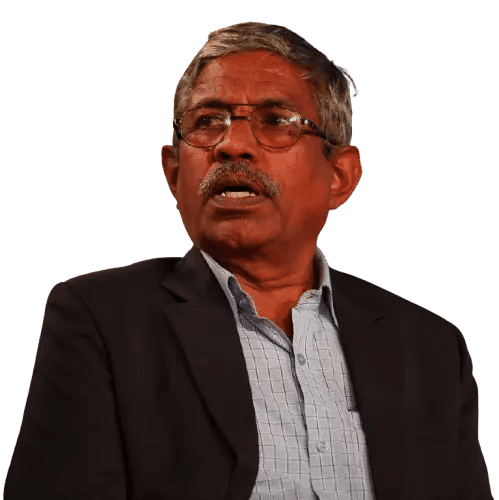
Recipient of India's Fifth National Grassroots Innovation Award (2009), invited as Innovation Scholar-in-Residence at Rashtrapati Bhavan (2015). Over 25 years of experience designing biomass energy technology for rural India.