
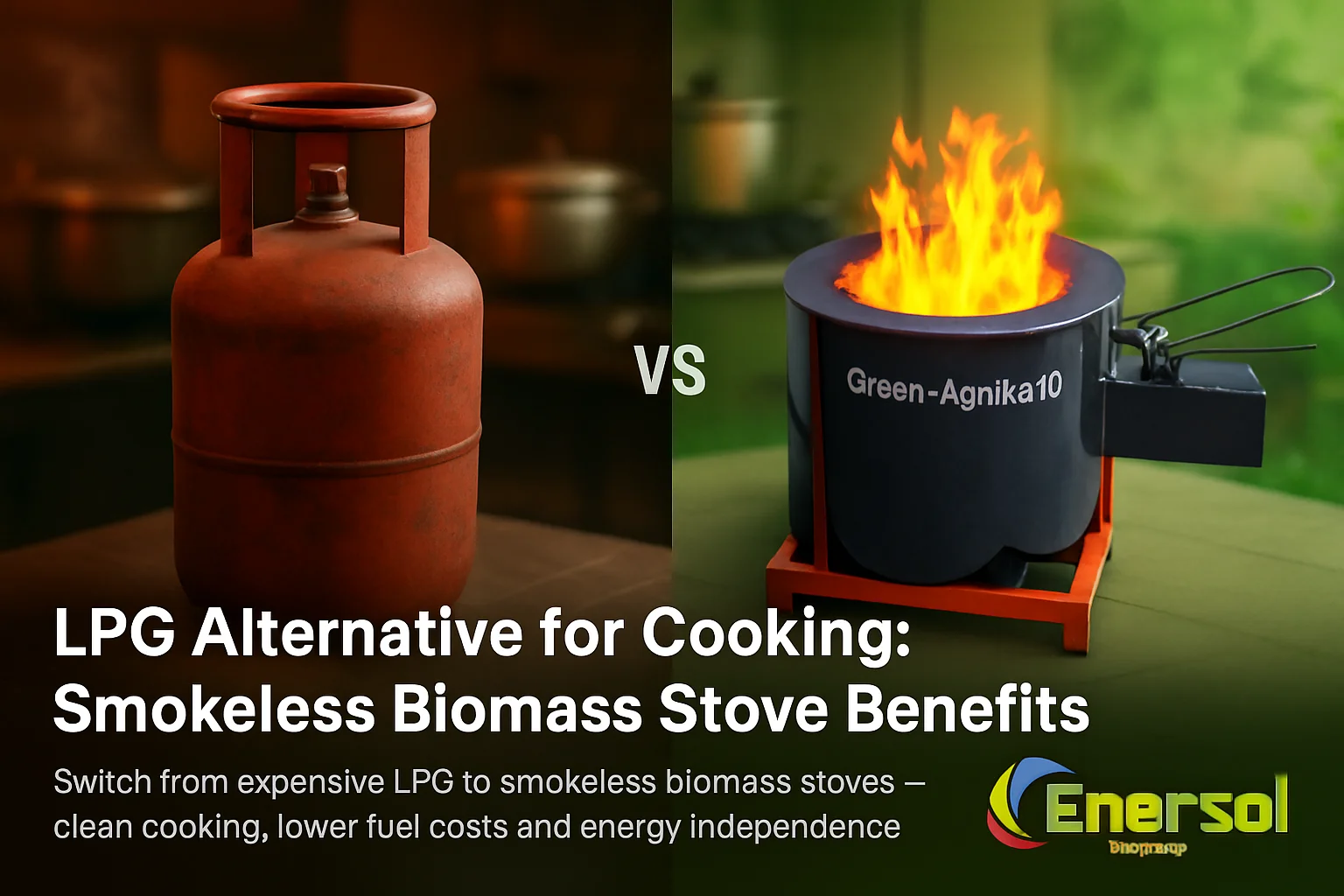
The Global Energy Crisis and the Need for LPG Alternatives
LPG has long been a popular cooking fuel due to its convenience and clean flame. However, rising fuel costs and supply disruptions during global crises have made LPG increasingly expensive and unreliable in many regions.
This has accelerated the demand for LPG alternatives for cooking that are:
- Affordable and locally available
- Environmentally sustainable
- Less dependent on global fuel imports
- Suitable for both domestic and commercial cooking
Smokeless biomass stoves meet these requirements by using renewable fuels such as wood pellets, briquettes, and agricultural residues.
What Is a Smokeless Biomass Stove?
A smokeless biomass stove is an advanced cooking system designed to burn biomass fuel efficiently while minimizing smoke emissions. Unlike traditional wood stove systems that produce heavy smoke and waste fuel, modern biomass stoves use improved combustion and airflow technology.
Some models operate using biomass gasifier stove technology, which converts biomass fuel into combustible gas through controlled gasification. This gas burns with a clean flame similar to LPG, delivering strong and consistent heat for cooking.
These stoves are widely used in homes, street food stalls, sweet shops, and industrial kitchens.
Smokeless Biomass Stove Benefits
The rising adoption of biomass stoves is driven by their multiple economic and environmental advantages.
1. Significant Cost Savings Compared to LPG
One of the biggest smokeless biomass stove benefits is the potential reduction in fuel costs. Biomass fuels such as crop residues, briquettes, and wood waste are widely available and inexpensive. Advanced biomass stoves can reduce cooking fuel expenses by up to 50–60% compared to LPG stoves, making them a highly economical option for businesses and households.
2. Reduced Dependence on Fossil Fuels
Countries that rely heavily on imported LPG are vulnerable to price fluctuations and supply shortages. Switching to biomass stove vs LPG reduces dependence on fossil fuels and promotes energy independence. By using locally available biomass resources, communities can maintain consistent cooking energy even during fuel supply disruptions.
3. Cleaner Cooking Environment
Traditional wood stove cooking methods often produce excessive smoke, which can cause indoor air pollution and respiratory issues. Smokeless biomass stoves are designed to:
- Produce minimal smoke
- Burn fuel more efficiently
- Reduce indoor air pollution
These improvements make them an important component of modern clean cooking solutions.
4. Utilization of Agricultural Waste
Biomass stoves convert agricultural waste into valuable energy. Materials such as:
- Rice husk
- Wood chips
- Coconut shells
- Sawdust
- Briquettes and pellets
can be used as fuel. This helps reduce waste burning and promotes sustainable energy use.
5. Ideal for Commercial and High-Volume Cooking
Many modern biomass stoves are designed for commercial operations such as sweet shops, street food stalls, and temple kitchens. For example, high-capacity biomass stoves can deliver LPG-equivalent heat output while reducing cooking costs by more than 60%, making them ideal for food production businesses.
Biomass Stove vs LPG: Key Comparison
| Feature | Biomass Stove | LPG Stove |
|---|---|---|
| Fuel Source | Agricultural waste, wood, pellets | Petroleum-based gas |
| Fuel Cost | Low and locally available | Increasingly expensive |
| Environmental Impact | Renewable energy source | Fossil fuel-based |
| Supply Dependence | Local resources | Imported fuel supply |
| Cooking Heat | Comparable to LPG | High heat output |
Key Insight
While LPG offers convenience, biomass stoves provide long-term sustainability, cost savings, and energy security.
The Future of Clean Cooking Solutions
The global push toward clean cooking solutions is driving innovation in biomass technologies. Governments and organizations are encouraging the adoption of improved cookstoves that reduce emissions and improve household energy access.
Manufacturers such as Enersol Biopower Pvt. Ltd. are developing a wide range of smokeless biomass stoves, biomass gasifiers, and renewable energy systems designed to make cooking more sustainable and affordable.
These technologies are expected to play a major role in reducing fossil fuel dependence while promoting cleaner kitchens worldwide.
Conclusion
With rising LPG prices and increasing global energy uncertainty, the demand for reliable cooking alternatives is growing rapidly. Smokeless biomass stoves are emerging as a powerful LPG alternative for cooking, offering affordability, sustainability, and efficiency.
By transforming agricultural waste into clean energy , biomass stoves not only reduce cooking costs but also support environmental sustainability and energy independence. As the world moves toward greener energy solutions, biomass gasifier stoves and advanced wood stove systems will play a key role in the future of clean cooking.
Looking for a Reliable LPG Alternative for Cooking?
Share your cooking volume, available biomass fuel type, kitchen size, and usage requirements. The Enersol Biopower team will help you identify the right smokeless biomass stove or gasifier-based cooking solution.
Contact Us for Biomass Stove Consultation
About the Author
Rai Singh Dahiya
Founder & Chief Innovator, Enersol Biopower Pvt. Ltd.
Grassroots innovator and recipient of India's Fifth National Grassroots Innovation Award (2009). Selected as Innovation Scholar-in-Residence at Rashtrapati Bhavan (2015). Over 25 years of experience pioneering clean biomass energy solutions deployed at IITs, NITs, and in UNDP international projects across Africa and the Middle East.