
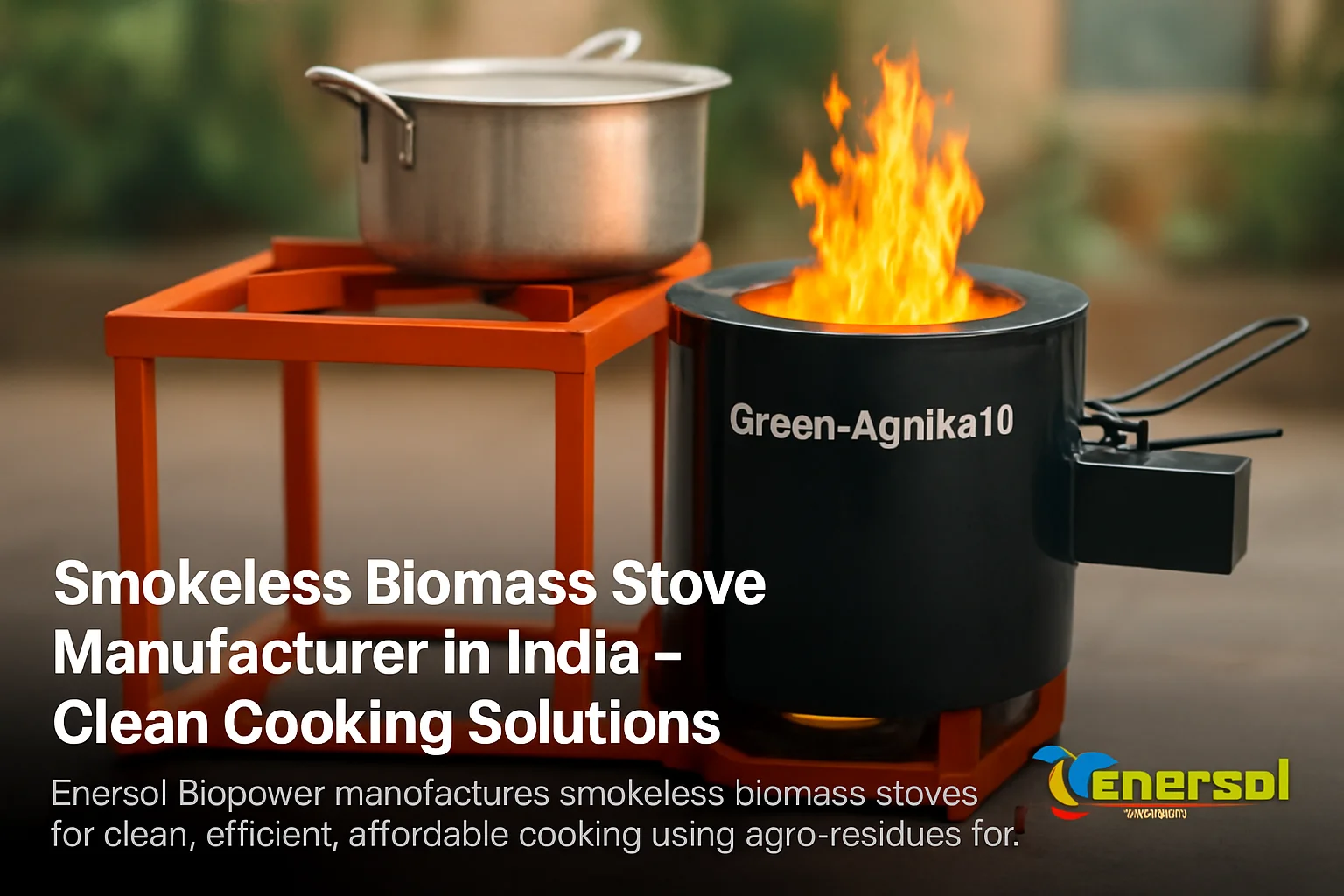
Introduction: The Need for Clean and Affordable Cooking Energy
Across large parts of India, Africa and other developing regions, cooking is still carried out on traditional mud chulhas and open fires. These stoves burn firewood, agricultural residue or dung with poor combustion. The thick smoke and soot that fill kitchens lead to blackened utensils, high fuel consumption and serious health problems – especially for women and children who spend long hours near the fire.
At the same time, many institutions and small enterprises depend on LPG, diesel or kerosene for bulk cooking, water heating and process heat. While relatively clean at the point of use, these fossil fuels are imported, price-sensitive and often difficult to afford or access consistently in rural and peri-urban areas.
A smokeless biomass stove bridges this gap. By using locally available biomass in a carefully engineered combustion chamber, it delivers a stable, high-temperature flame with much lower smoke and higher efficiency than traditional chulhas. When the design is inspired by biomass gasifier principles, thermal efficiency and emission performance improve even further.
Enersol Biopower Pvt. Ltd., based in Jaipur, India, combines its proven expertise in biomass gasifiers with robust stove engineering to supply smokeless biomass cooking systems for households, institutions and small industries in India and around the world.
What Is a Smokeless Biomass Stove?
A smokeless biomass stove is an improved cookstove that burns solid biomass fuels in a controlled way. It is designed to manage air flow, fuel residence time and heat transfer so that combustion is more complete, emissions are lower and a higher portion of the fuel’s energy is converted into useful heat.
- Compatible fuels: briquetted agro-residues, wood chips, pellets, twigs, coconut shells and other sustainably available biomass.
- Controlled combustion: tailored primary and secondary air inlets help the fuel burn more cleanly, greatly reducing visible smoke and soot.
- Improved heat delivery: optimised pot–flame interaction reduces heat loss and cuts fuel consumption compared to traditional chulhas or open fires.
Many modern biomass stoves are built using gasifier-inspired designs, where solid fuel first partially converts into a combustible producer gas and then burns with a clean, strong flame. This approach allows Enersol Biopower to offer stoves that are rugged, efficient and practical in real village, institutional and industrial environments.
How Does a Smokeless Biomass Stove Work?
While designs and capacities vary, efficient biomass stoves follow a few core engineering principles. A basic understanding of these principles helps project developers, NGOs and institutional buyers select the right solution and plan training for end users.
Controlled Air Flow
Traditional chulhas draw air in an uncontrolled manner, which creates cold spots and unburnt smoke. A smokeless biomass stove is deliberately designed to:
- Introduce primary air from below or from the side to support fuel ignition and char burning.
- Supply secondary air near the flame zone to burn unburnt gases and reduce smoke.
- Maintain an optimised air–fuel ratio for a stable, high-temperature, low-smoke flame.
Optimised Combustion Chamber
The combustion chamber is the core of the stove and is engineered to achieve clean combustion:
- Insulated walls help maintain high internal temperatures for improved burn quality.
- Carefully selected height and diameter support a steady flame and good mixing of air and gases.
- Grates and ash handling systems ensure uniform burning and easy cleaning for users.
In advanced models operating in a gasifier mode, biomass undergoes partial combustion to form a combustible producer gas. This gas then burns with a clean flame above the fuel bed. This gasification approach dramatically reduces visible smoke and increases overall thermal efficiency compared to conventional chulhas and open fires.
Why Shift from LPG, Kerosene and Traditional Chulhas to Biomass Stoves?
Lower and More Stable Fuel Costs
- LPG, diesel and kerosene prices are volatile and depend heavily on policy and imports.
- Rural and semi-urban users often face supply constraints or must travel long distances for refills.
- Biomass stoves utilise local biomass, briquettes or pellets, which can be significantly cheaper per unit of useful heat.
- For institutions and small industries, switching to biomass-based systems can reduce overall fuel bills and improve budget predictability.
Better Health and Indoor Air Quality
- Traditional chulhas emit dense smoke, particulate matter and black soot inside kitchens.
- Smokeless biomass stoves substantially reduce visible smoke and harmful pollutants at the point of cooking.
- Cleaner kitchens mean healthier working conditions for women, children and cooks.
Climate and Environmental Benefits
- Biomass is renewable when sourced from sustainable agricultural residues or dedicated energy crops.
- Improved stove efficiency reduces wood consumption and relieves pressure on forests.
- Clean combustion cuts black carbon – a major contributor to climate warming.
Energy Security and Local Value Creation
- Communities become less dependent on external LPG or kerosene supply chains.
- Agro-residues that were earlier burnt in fields or discarded can be converted into useful energy.
- Local value chains develop around biomass collection, briquetting, stove installation and maintenance.
Traditional Chulha vs LPG vs Smokeless Biomass Stove – At a Glance
| Parameter | Traditional Chulha / Open Fire | LPG Stove | Smokeless Biomass Stove |
|---|---|---|---|
| Fuel Cost | Medium on paper, high in practice due to low efficiency. | High and volatile, linked to global prices. | Low and locally anchored (biomass, briquettes, pellets). |
| Smoke and Soot | Very high – thick smoke and blackened utensils. | Very low at point of use. | Very low when operated with correct fuel and procedure. |
| Approximate Thermal Efficiency | Around 15–20%. | Typically 50–60%. | Around 35–45% and higher, depending on stove model and operation. |
| Fuel Source | Firewood, dung cakes, loose crop residue. | Imported fossil fuel. | Local biomass, agro-residues and solid biofuels. |
| Suitability for Rural Users | Common but unhealthy and labour-intensive. | Clean but often expensive or unavailable. | Clean, affordable and adaptable to local fuel and cooking patterns. |
| Climate and Environmental Impact | High black carbon, inefficient fuel use. | Lower particulate, but fossil CO₂ emissions. | Lower particulate and soot; biomass can be part of a renewable carbon cycle when managed well. |
Applications of Smokeless Biomass Stoves
Enersol Biopower’s smokeless biomass stoves are available in different capacities and configurations, so they can be deployed well beyond single-family kitchens. From rural households to institutional and small-industry settings, the same core technology can be tailored to suit diverse heat and cooking loads.
-
Rural and Semi-Urban Households
Clean replacement for traditional chulhas used for everyday cooking, boiling water, milk heating and other domestic requirements, enabling families to rely on local biomass instead of expensive LPG refills.
-
Community and Institutional Kitchens
Schools, hostels, ashrams, community canteens and religious institutions can install larger stove systems or gasifier-based cooking units for reliable bulk cooking with lower and more predictable fuel costs.
-
Small Industries and Agro-Processing Units
Biomass stove technology can be adapted for drying, roasting, water heating and small process heat requirements in agro-processing units, dairies, food processing and other cottage industries.
-
Heating and Hot Water Generation
With suitable heat exchangers and plumbing, biomass stoves can be integrated into hot water systems, space-heating arrangements or pre-heating circuits for industrial processes, reducing dependence on electric or fossil-fuel-based boilers.
Design Features of Enersol Biopower’s Smokeless Biomass Stoves
Enersol Biopower leverages decades of experience in biomass gasifiers and renewable energy systems to design stoves that are technically strong and practically usable. While individual models differ by capacity and configuration, some common design features include:
Optimised Combustion Geometry
Carefully dimensioned combustion chambers with appropriate insulation and grate design deliver high-temperature combustion, good flame stability and uniform heat distribution for faster cooking.
Engineered Primary & Secondary Air Inlets
Air pathways are tuned through iterations of design and field testing. In select models, air flow can be adjusted to handle different fuel types, sizes and moisture levels, maximising efficiency in real-world conditions.
Rugged and User-Friendly Construction
Strong steel or hybrid construction, stable pot supports, robust handles and ergonomic loading doors make the stoves suitable for daily use in demanding rural, institutional and small-industry settings.
Each model is designed to balance performance, durability, ease of operation and affordability so that clean cooking technology translates into genuine long-term adoption and measurable impact in the field.
Biomass Stove Models & Typical Technical Parameters
Enersol Biopower offers smokeless biomass stove models for small, medium and large cooking loads. Actual specifications vary by project and configuration, but typical parameters include:
| Model Type | Typical Application | Approx. Cooking Capacity | Compatible Fuels |
|---|---|---|---|
| Household Stove | Single-family rural and semi-urban kitchens. | 2–6 members, everyday cooking. | Briquettes, small wood pieces, pellets, agro-residue blends. |
| Institutional Stove | Schools, hostels, ashrams, community kitchens. | 50–500 meals per session (depending on model). | Briquettes, graded biomass, pellets, wood chips. |
| Process-Heat Stove / Gasifier Unit | Drying, roasting, water heating and small process loads. | Customised to application and process cycle. | Project-specific fuels with advisory from Enersol’s engineering team. |
Detailed datasheets with rated capacities, thermal efficiencies, material specifications and installation guidelines are shared as part of project discussions. This ensures every partner receives a solution tailored to their cooking patterns, fuel availability and budget.
Enersol Biopower – Smokeless Biomass Stove Manufacturer, Supplier & Exporter from India
Enersol Biopower Pvt. Ltd. is widely recognised in the bioenergy space as a trusted designer and manufacturer of biomass gasifiers, torrefaction systems and smokeless biomass stoves. The company’s manufacturing base in Jaipur, Rajasthan combines fabrication capability with rigorous testing and continuous product development.
- Manufacturing expertise: In-house design, fabrication and quality control ensure that each stove model meets demanding performance and durability requirements.
- Customised solutions: From single-family units to high-capacity institutional and process-heat systems, Enersol tailors designs to suit local fuel types, cooking practices and infrastructure constraints.
- Global supply capability: Enersol serves partners in India and export markets across Africa, South Asia, Latin America and other regions, working closely with NGOs, development agencies and private distributors.
- Sustainability focus: Every product is engineered to reduce emissions, improve fuel efficiency and align with broader clean energy and climate objectives.
This combination of engineering depth, on-ground experience and export readiness makes Enersol Biopower a reliable partner for organisations implementing clean cooking, rural electrification and biomass-based energy programmes.
How to Choose the Right Biomass Stove Model for Your Project
Selecting the appropriate stove model is crucial for long-term success and user satisfaction. Whether you are designing a clean cooking programme, upgrading an institutional kitchen or exploring biomass integration for a small industrial unit, keep the following points in mind.
1. Daily Cooking Load and Operating Pattern
Estimate the number of meals, people served, batch sizes and typical cooking hours per day. Household kitchens, mid-day meal schemes, hostels and canteens each demand different stove capacities and layouts.
2. Fuel Availability and Quality
Map the biomass resources that are available locally on a sustained basis – briquettes, pellets, wood chips, crop residues or a combination. The stove must be compatible with the size, density and moisture characteristics of these fuels.
3. User Skills, Training and Maintenance
The best stove is one that end users can operate confidently every day. Ensure that lighting procedure, fuel loading, ash removal and basic troubleshooting are simple and clearly explained through training and manuals.
4. Performance Data and References
Ask for laboratory test results, field performance data and references from actual installations. Working with a manufacturer that has repeat orders and long-term clients adds confidence to the project's technical and financial viability.
Enersol Biopower’s engineering and project teams routinely work with partners to match stove models with local conditions, budgets and programme objectives. This consultative approach improves adoption rates and ensures that systems continue to perform reliably in the field.
Example Use-Cases of Biomass Stoves in the Field
Clean cooking and biomass-based heat solutions can be integrated in many different programme designs. A few recurring patterns observed across regions and sectors include:
Rural Household Clusters
Clusters of villages where families previously cooked on smoky chulhas adopt smokeless biomass stoves using local agro-residue briquettes. Over time, households benefit from cleaner kitchens, reduced respiratory issues, less time spent collecting fuel and improved quality of life.
School and Hostel Kitchens
Government and private schools, mid-day meal schemes and hostels integrate larger biomass stove systems or gasifier-based cooking solutions. This allows them to reduce reliance on LPG, stabilise operating expenses and align with institutional sustainability targets.
Agro-Processing and Cottage Industries
Small units involved in drying spices, fruits, herbs, tea or grains deploy customised biomass stove or gasifier systems to provide controlled process heat. Using agro-waste as fuel helps close the resource loop, creating local income opportunities while reducing waste burning and emissions.
Frequently Asked Questions about Smokeless Biomass Stoves
1. What makes a biomass stove “smokeless”?
A stove is considered smokeless when its combustion system is designed to burn most of the smoke and unburnt gases inside the chamber itself. By controlling air flow and maintaining higher temperatures, the stove drastically reduces visible smoke at the cooking point compared to a traditional chulha.
2. Do users need special training to use these stoves?
Basic user training is important – especially for lighting the stove correctly, loading fuel in recommended quantities and cleaning ash regularly. Enersol Biopower supports project partners with training materials and guidance to make adoption simple for end users.
3. Are Enersol’s biomass stoves eligible for government or donor-supported clean cooking programmes?
Many clean cooking and rural energy programmes, both in India and internationally, actively promote improved biomass stoves and gasifier-based solutions. Enersol Biopower collaborates with NGOs, government agencies and development partners to supply suitable stove models and technical support for such initiatives.
Conclusion: Biomass Stoves as a Key Pillar of the Clean Energy Transition
Smokeless biomass stoves are more than incremental upgrades to traditional chulhas. When carefully designed and correctly implemented, they become a powerful lever for improving health, reducing fuel costs, cutting emissions and building resilient local energy systems based on sustainable biomass.
Combined with biomass gasifiers, solar systems and other decentralised energy solutions, they help households, institutions and small industries move away from polluting and expensive fuels like kerosene, coal and diesel. They also create opportunities for local entrepreneurship in fuel preparation, stove distribution and maintenance.
By partnering with Enersol Biopower – an experienced smokeless biomass stove and biomass gasifier manufacturer, supplier and exporter from India – project developers and organisations gain access to reliable hardware, practical field insights and long-term technical support. Together, it becomes possible to scale clean cooking interventions that are technically robust, economically viable and socially transformative.
Partner with Enersol Biopower for Smokeless Biomass Stove Projects
Looking to implement clean cooking or biomass-based heat solutions for households, institutions or small industries? Enersol Biopower can support you with proven stove models, gasifier systems and project-level engineering support tailored to your location and fuel conditions.
Contact Us to Discuss Your Project
About the Author
Rai Singh Dahiya
Founder & Chief Innovator, Enersol Biopower Pvt. Ltd.
Grassroots innovator and recipient of India's Fifth National Grassroots Innovation Award (2009). Selected as Innovation Scholar-in-Residence at Rashtrapati Bhavan (2015). Over 25 years of experience pioneering clean biomass energy solutions deployed at IITs, NITs, and in UNDP international projects across Africa and the Middle East.