

Project Diary: The Story of Enersol's Biomass Gasifier at IIT Ropar
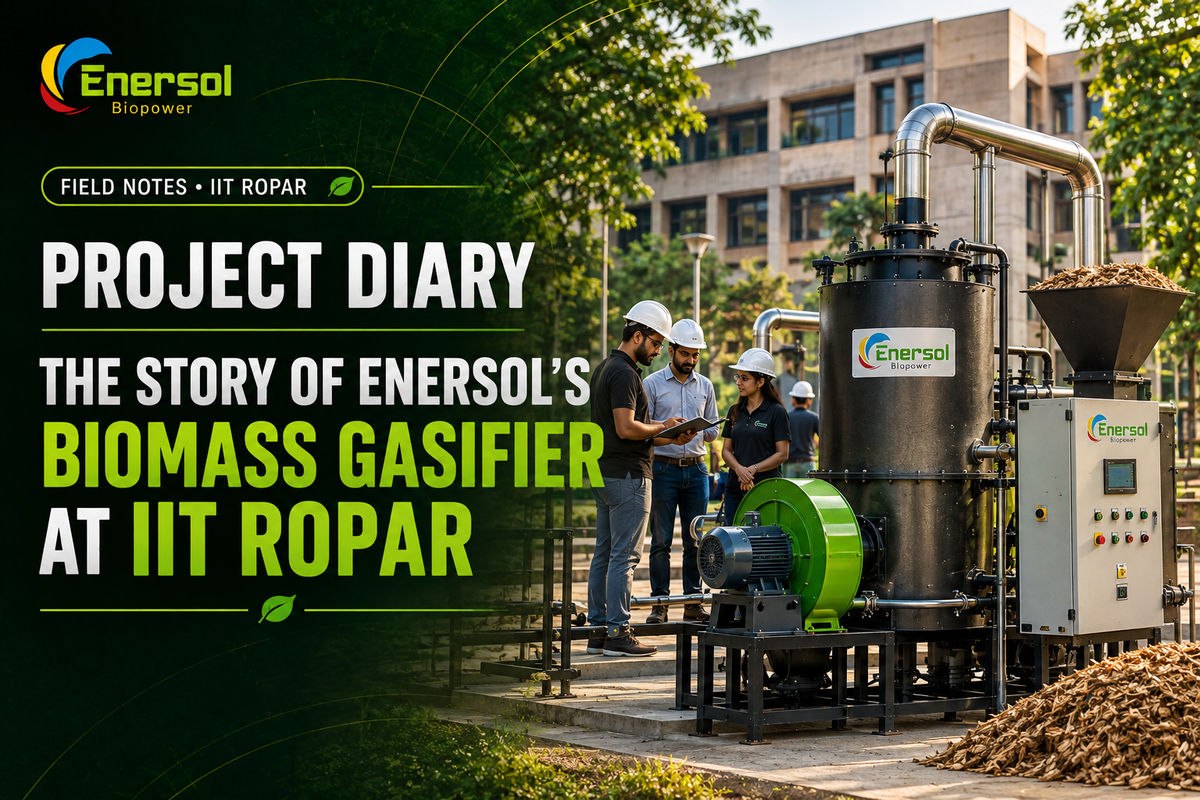
Enersol Biopower supplied a 10 kW biomass gasifier to IIT Ropar. This diary looks at the system behind that project, why this size suits a research campus and what it takes to run one well.
By Rai Singh Dahiya, Founder, Enersol Biopower | Published 30 October 2026
Project at a Glance
- Client: IIT Ropar (Indian Institute of Technology, Punjab)
- System: 10 kW biomass gasifier
- Supplier: Enersol Biopower Pvt. Ltd., Jaipur
- Current 10 kW model: ESB-R10, with a spark ignition engine and dry filtration
- Keep in mind: Dry fuel and steady running matter most on any site
Why This Project Matters
Most of our gasifiers go to the places you would expect: farms, mills and small factories. A project at a research institute is different. The people working with the machine want to measure it, question it and learn from it.
IIT Ropar is one of the institutions that Enersol has served, along with NIT Tiruchirappalli and KNUST in Ghana. For a company that began with grassroots innovation, projects like these matter. They put technology built for rural India in front of people trained to test it.
Why 10 kW Suits a Research Campus
Enersol lists its 10 kW gasifier as a fit for villages, research institutions and small-scale industries. For an institute, the size has a clear appeal. It is large enough to run the full chain of a real power system, yet small enough to fit on a campus.
That full chain is the point. Solid biomass goes in, producer gas is made and cleaned, an engine burns it and a generator delivers electricity. Each stage can be seen and studied in one place, using the same kind of equipment that runs in the field.
The 10 kW System
A biomass gasifier heats dry biomass with a limited supply of air, so the fuel turns into a combustible producer gas instead of burning fully. The gas is then cleaned and sent to an engine, which drives a generator.
Here are the listed specifications of Enersol's current 10 kW model, the ESB-R10. They describe today's model, so details may differ from the unit supplied to IIT Ropar.
| Specification | ESB-R10 |
|---|---|
| Power output | 10 kW (12.5 kVA) |
| Gas consumption | 30 m³/hr producer gas |
| Engine type | Spark ignition |
| Filtration | Dry filtration with the patented RS Filter |
| Gasifier unit size | 10 ft × 7 ft × 7 ft |
| Genset unit size | 6 ft × 3.5 ft × 6 ft |
| Weight | 2 tons |
From Jaipur to Campus: Preparing the Site
Every project leaves our workshop in Jaipur and has to become a working system on someone else's site. For a 10 kW gasifier, a campus should plan for these basics:
- Space: The ESB-R10 has two units, a 10 ft × 7 ft × 7 ft gasifier and a 6 ft × 3.5 ft × 6 ft genset, with room needed around them for fuelling and maintenance.
- Access: The listed weight is 2 tons, so the route to the site must allow for delivery and lifting.
- Ventilation: Producer gas contains carbon monoxide, so the location needs good airflow and safe working rules.
- Fuel storage: Keep fuel under cover and off the ground, especially in the monsoon.
The Challenges Any Small Gasifier Faces
No gasifier runs well by accident. These are the common challenges on any site, and a campus has particular reasons to watch them:
- Wet fuel: Moisture takes heat from the reaction, which weakens the gas. Keep fuel moisture below 20%.
- Tar: Tar usually forms when the reactor runs too cool. Long periods at low load and frequent stops and starts both add to the risk, and short test runs can involve both.
- Blocked filters and air leaks: A blocked filter restricts gas flow, while an air leak dilutes the gas. Either one can look like a problem with the engine.
Our troubleshooting and maintenance guide covers these faults in more detail.
What the People Running It Need to Know
On a campus, the people using a machine can change from one semester to the next. A simple routine that anyone can follow protects the system when they do.
- Every day: Check fuel, ash, gauges and leaks.
- Every week: Check filters and gas lines.
- Every month: Make deeper checks of the reactor, blower and engine.
- Always: Follow the manual and running hours for the exact schedule, and put safety first before any repair.
What an Institute Can Do with a 10 kW Gasifier
Every institute will have its own plans. In general, a system of this size opens up work such as:
- Fuel studies: Compare suitable wood chips, pellets, briquettes, agro-waste and forestry waste.
- Gas studies: Look at how fuel moisture and load affect gas quality and output.
- Engine studies: Follow how a spark ignition engine responds to producer gas.
- Teaching: Show students a complete waste-to-energy system at work, not just a diagram.
Three Takeaways for Institutes
- Start with the purpose. Research, teaching and regular power supply each ask something different of a system, so settle this first. Our biomass gasifier range shows the capacities available to match a gasifier to its load.
- Plan the fuel before the machine. A dry, suitable and steady fuel supply decides how well a gasifier runs.
- Give the system an owner. Someone on campus should keep the routine, the records and the safety rules going.
Frequently Asked Questions
What size of biomass gasifier did Enersol supply to IIT Ropar?
Enersol Biopower supplied a 10 kW biomass gasifier to IIT Ropar, the Indian Institute of Technology in Punjab.
What are the specifications of Enersol's 10 kW biomass gasifier?
Enersol's current 10 kW model, the ESB-R10, is rated at 10 kW (12.5 kVA). It uses a spark ignition engine, about 30 m³/hr of producer gas and a dry filtration system.
What fuels can a 10 kW biomass gasifier use?
The ESB-R10 is listed as working with wood chips, pellets, briquettes, agro-waste and forestry waste. Fuel should be dry, and moisture is usually kept below 20%.
Can research institutes use a biomass gasifier?
Yes. Small gasifiers suit universities and institutes that study renewable energy. Enersol's institutional clients include IIT Ropar, NIT Tiruchirappalli and KNUST Ghana.
Planning a Gasifier for Your Institute?
Tell us about your research, teaching or power needs. Our team will help you find the right biomass gasifier.
Talk to Our Team →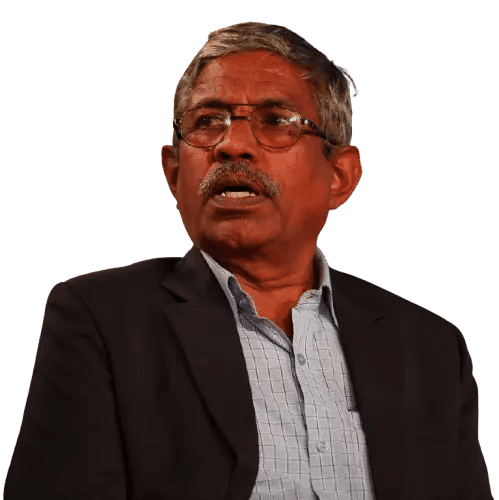
Recipient of India's Fifth National Grassroots Innovation Award (2009), invited as Innovation Scholar-in-Residence at Rashtrapati Bhavan (2015). Over 25 years of experience designing biomass energy technology for rural India.