

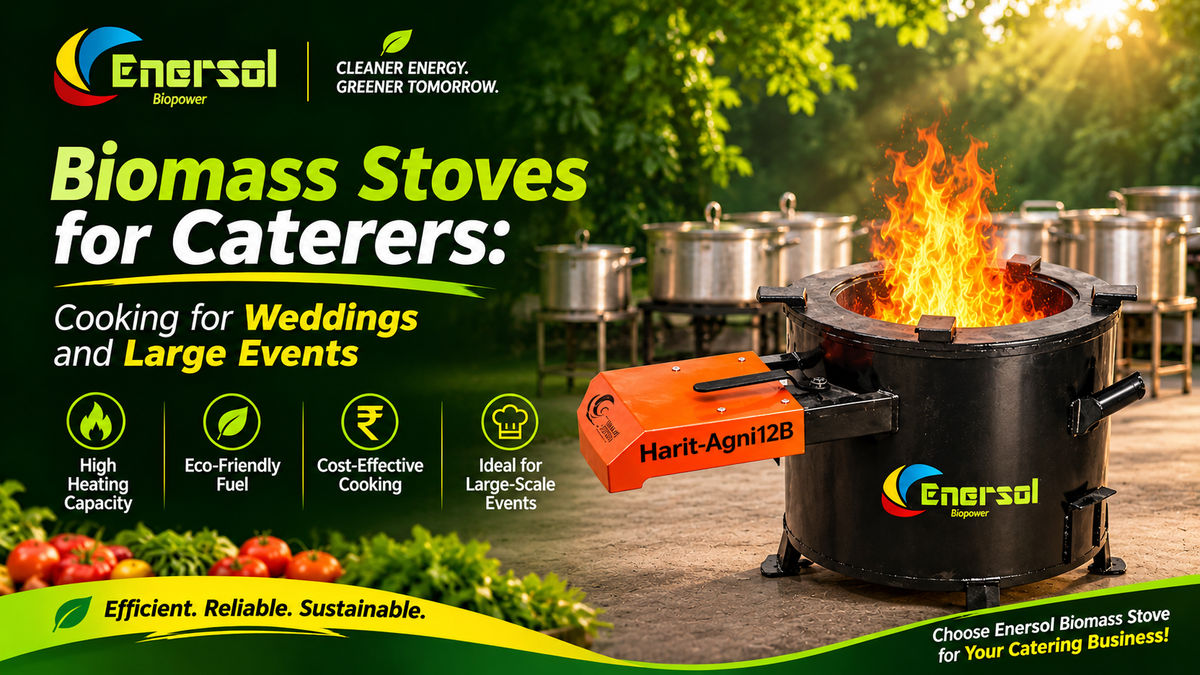
Biomass Stoves for Caterers: Cooking for Weddings and Large Events
Caterers can use biomass stoves for bulk dishes such as dal, rice, curries, tea and milk, and cut their dependence on LPG cylinders. The keys are to match each stove to the job, plan fuel for every event, and set up in a safe, well-ventilated area away from guests and tents.
By Rai Singh Dahiya, Founder, Enersol Biopower | Published 12 October 2026
Key Article Highlights
- Start with long-boiling dishes, and keep LPG for delicate work at first
- Weight matters, so choose stoves that your team can really transport
- Plan fuel for each event, then add a 20% reserve
- Forced-draft stoves need power, so plan your generator and cables
- Keep the cooking area away from tents, decorations and guests
Why Caterers Are Looking Beyond LPG
Catering is a tight business. You often quote a price weeks before the event, so a rise in LPG prices comes straight out of your margin. Commercial LPG reached about ₹2,078 a cylinder in April 2026, and a large event can use several cylinders. In the wedding season, getting enough of them on time can be a problem in itself.
Biomass gives you another option. Fuel such as briquettes can be bought in advance, stacked and carried to the venue. You can also set your fuel cost before you quote. It does need more planning than a gas connection, and this guide shows you where to start.
Which Dishes Suit Biomass Best?
You do not have to change everything at once. Look at your menu and start where biomass is easiest.
| Cooking Type | Examples | Our Suggestion |
|---|---|---|
| Long boiling | Dal, rice, water, tea, milk | Start here |
| Large curries | Sabzi, kadhi, gravies | Move next |
| Deep frying | Puri, pakora, jalebi | Test with your karigar |
| Fast live counters | Chaat, dosa, quick stir-fries | Keep LPG until tested |
Choose Stoves You Can Really Move
A home or hostel kitchen installs a stove once. You may load, unload and reconnect it every week, so the weight is as important as the heat output.
| Model | Weight | Biomass Use | Power | Good For |
|---|---|---|---|---|
| Bio-Mini | About 14 kg | 1.5–2 kg/hr | 12V DC fan | Tea and small counters |
| Green-Agnika10 | 40–50 kg | 5–10 kg/hr | 4" AC fan | Regular event use |
| Harit Agni 12 | About 70 kg | 5–10 kg/hr | 4" AC fan | Mid-size batches |
| Green-Magic15 | 190–200 kg | 12–25 kg/hr | 100W blower | Base kitchens and large vessels |
Before you buy, check the size of your biggest vessel, how many helpers can lift a stove, and how it will sit in your vehicle. Many caterers may find that a few mid-size stoves are more flexible than one very large unit. If you run a base kitchen too, the heavier models can stay there.
How to Plan Fuel for Each Event
Treat fuel like any other event material. In this illustrative example, three stoves run for 5 hours at about 8 kg an hour each.
Weigh what you actually use at your first few events, and keep a record by menu and guest count. You will soon be able to work out your fuel per 100 guests, and add it to your quotations.
- Choose one fuel: Briquettes or pellets are usually easier to pack and feed than loose fuel.
- Keep it dry: Stoves need fuel below 20% moisture, so carry it in covered bags and keep it off wet ground.
- Buy before the season: Book your fuel before wedding dates pile up.
- Check the cost: Compare your fuel cost per event with what you spent on LPG.
Setting Up at the Venue
Visit the venue before the event, if you can, and agree where the cooking area will be.
Event Safety Essentials
- Clear space: Keep stoves away from tents, cloth, decorations, dry grass and fuel stacks.
- Keep people back: Rope off the cooking area from guests and children.
- Fire equipment: Keep suitable extinguishers within reach, and tell your team who does what.
- Hot ash: Put it in a covered metal container. Never leave it in the open or in a bag.
- Hot stoves: Let them cool fully before you move or load them.
- Local rules: Follow your local fire safety rules and venue requirements.
Getting Your Team Ready
Your karigars have years of experience with gas, and they are the ones who will make this work. Bring them in early.
- Practise first: Try the stoves in your base kitchen before any client event.
- Start small: Use them first at a small event, with LPG ready as backup.
- Name a stove lead: Make one person responsible for fuel, fire and ash at each event.
- Learn the regulator: Fan speed takes the place of the gas knob, and it needs practice.
- Care for the stoves: Rough transport damages equipment, so clean and check it after each event. Our stove daily care guide can help.
Event-Day Checklist
Before You Leave
- Stoves checked and cleaned
- Fuel plus 20% reserve
- Fans, regulators and cables
- Lighting material
- Gloves and tools
At the Venue
- Safe, level cooking area
- Power tested
- Extinguishers in place
- Guests kept away
- LPG backup ready
After Service
- Fire out and stoves cool
- Ash cooled and removed
- Site left clean
- Fuel used recorded
- Faults noted for repair
Frequently Asked Questions
Can biomass stoves be used for wedding catering?
Yes, they can suit bulk dishes such as dal, rice, curries, tea and milk. They work best at outdoor or well-ventilated cooking areas. Keep the stoves away from tents and guests, and run a trial at a smaller event first.
Which biomass stove is best for a caterer?
It depends on how far you move it and what you cook. Lighter models, such as the 14 kg Bio-Mini or the 40–50 kg Green-Agnika10, are easier to transport. Heavier stoves, such as the 190–200 kg Green-Magic15, suit a fixed base kitchen or a venue with lifting help.
How much biomass fuel do I need for an event?
Multiply the number of stoves by their fuel use per hour and the cooking hours, then add a reserve. Three stoves using 8 kg an hour for 5 hours need 120 kg, or about 144 kg with a 20% reserve.
Do biomass stoves need electricity at an event?
Yes. Forced-draft stoves need power for a fan or blower. Larger models use blowers of about 100–200W, so a small generator or inverter connection can run them. Confirm your power source and safe cabling before the event.
Can I replace all my LPG cylinders with biomass stoves?
Start with long-boiling, high-volume dishes and keep LPG for dishes that need fast or fine control. Once your team is confident, you can move more of your menu across. Many caterers may prefer to run both.
What safety steps should caterers follow with biomass stoves?
Set stoves on flat, non-flammable ground, away from tents, decorations, guests and fuel stacks. Keep a suitable extinguisher nearby, and cool hot ash in a covered metal container. Get venue permission, and follow your local fire safety rules.
Planning for the Wedding Season?
Tell us your usual guest count, your biggest vessels and how you move equipment. Our team will help you choose the right stoves.
Get a Free Quote →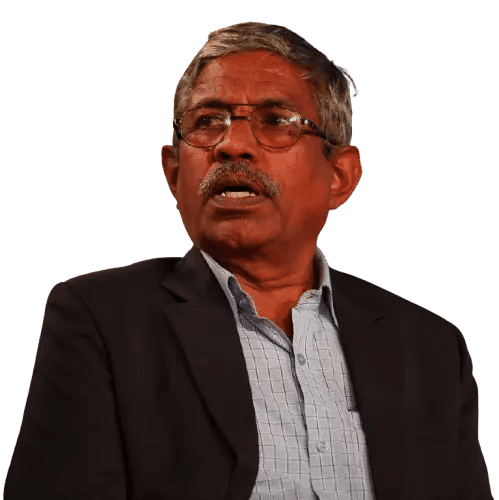
Recipient of India's Fifth National Grassroots Innovation Award (2009), invited as Innovation Scholar-in-Residence at Rashtrapati Bhavan (2015). Over 25 years of experience designing biomass energy technology for rural India.