

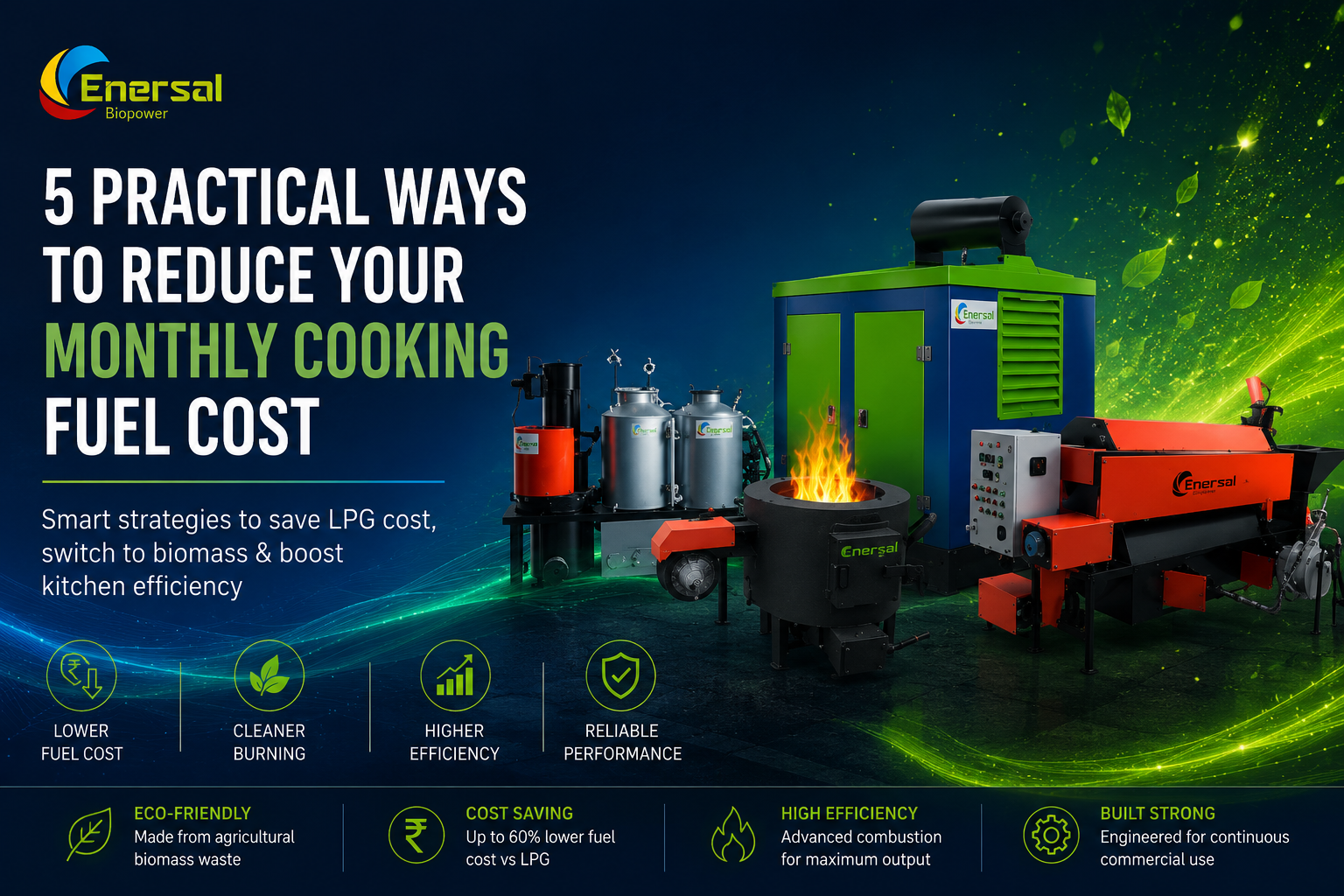
If you run a dhaba, sweet shop, restaurant, hostel canteen, or mid-day meal kitchen, you already know: fuel is one of your highest fixed costs. In 2026, commercial LPG in India costs ₹900–₹1,000 per 19 kg cylinder. A busy kitchen burns 2–4 cylinders a day. That is ₹54,000–₹1,20,000 per month — before you have paid a single salary.
The good news is that reducing this cost does not require shutting down operations or compromising on food quality. It requires the right fuel, the right stove, and a few smart habits.
Why Cooking Fuel Is Eating Your Profit
Most kitchen owners focus on ingredient costs and labour. Fuel often gets treated as a fixed expense that cannot be changed. This is a costly assumption.
| Expense | Monthly Cost |
|---|---|
| Ingredients | ₹80,000–₹1,50,000 |
| Labour | ₹30,000–₹60,000 |
| LPG Fuel (2 cylinders/day) | ₹54,000–₹60,000 |
| Rent & utilities | ₹20,000–₹40,000 |
Fuel often represents 25–35% of total monthly operating costs — and it is the expense with the most room for immediate reduction.
Method 1 — Switch from LPG to Biomass Fuel
This is the single highest-impact change a commercial kitchen can make. Biomass briquettes — made from compressed agricultural waste like paddy husk, mustard stalks, or sugarcane bagasse — deliver comparable heat to LPG at a fraction of the cost.
The Numbers
- LPG: ₹90–100/kg, calorific value ~11,900 kcal/kg
- Biomass briquettes: ₹7–10/kg, calorific value ~3,800–4,200 kcal/kg
- Cost per usable kcal of heat: 4–6× cheaper with biomass
Real Example:
A halwai in Jaipur running 3 burners 14 hours a day was spending ₹63,000/month on LPG. After switching to Enersol Biopower's commercial biomass stove and sourcing briquettes at ₹8/kg, his monthly fuel bill dropped to ₹8,500. Saving: over ₹54,000 every month.
Biomass works best with stoves designed for it. A standard LPG burner is not efficient for solid fuel — you need a forced-draft biomass stove to unlock the full savings.
Method 2 — Choose the Right Stove for Your Load
Most kitchens either undersize or oversize their stoves. Both are wasteful. Matching stove to load is the second most impactful change you can make.
| Kitchen Type | Daily Hours | Recommended Stove |
|---|---|---|
| Small dhaba (50 pax) | 8–10 hrs | Enersol 1-burner standard |
| Mid-size restaurant (150 pax) | 12–14 hrs | Enersol 2-burner jumbo |
| Sweet shop / halwai | 12–16 hrs | Enersol Jumbo-Shakti series |
| Hostel / canteen (300+ pax) | 10–12 hrs | Enersol industrial 3-burner |
Forced-draft technology in Enersol stoves produces a clean, consistent blue flame with thermal efficiency of 35–40% — versus 18–22% for open-flame traditional stoves. That gap directly translates into less fuel burned per meal.
Method 3 — Batch Cook and Plan Your Burner Hours
Every time you light a burner, bring it to temperature, and shut it down, you waste fuel on the heat-up and cool-down cycle. Kitchens that plan their cooking workflow can reduce this waste by 15–20%.
- Group similar tasks (frying, boiling, simmering) and run them back-to-back on the same burner
- Schedule large-batch items (dal, rice, gravies) at the start when the stove is hottest
- Keep a 30-minute "low flame" wind-down rather than stopping and restarting
- Pre-soak grains and lentils overnight — cuts boiling time by 30–40%
A disciplined batch-cooking schedule typically saves 2–3 LPG cylinders per month in a mid-size kitchen — roughly ₹1,800–₹3,000 at current prices.
Method 4 — Use Insulated Cookware and Tight Lids
An open vessel loses 30–40% of heat energy to the surrounding air. A covered vessel retains it. Simple, but consistently underestimated.
Lid on every pot
Reduces boiling time by 25–30%, directly cutting fuel consumed per batch
Thick-bottomed kadhai
Distributes heat evenly — less hot spots, less food burning, less need for maximum flame
Pressure cooker for dals and rice
Cuts cooking time by 50–60%. A canteen cooking 50 kg of rice daily can save ₹2,400/month on rice alone.
Method 5 — Reduce Heat-Up Waste with Preheated Water
Starting a cooking cycle with cold water wastes significant fuel just raising temperature. If your kitchen uses large volumes of water for boiling, preheating it is an easy win.
- Solar water heater: Free hot water for the first 4–6 hours of the day. Payback in under 18 months.
- Waste-heat recovery: Channel exhaust heat from your stove to a water tank.
- Insulated storage: Pre-boil large batches at off-peak hours and store in insulated containers.
LPG vs Biomass Stove: Full Cost Comparison
| Factor | LPG | Enersol Biomass Stove |
|---|---|---|
| Fuel cost per kg | ₹90–₹100 | ₹7–₹10 |
| Stove thermal efficiency | 55–65% | 35–40% (forced draft) |
| Cost per 1,000 kcal useful heat | ~₹15–₹18 | ~₹4–₹6 |
| Monthly fuel cost (heavy use) | ₹54,000–₹1,20,000 | ₹8,000–₹18,000 |
| Payback on equipment | — | 30–60 days |
Combined impact of all 5 methods
Frequently Asked Questions
Is biomass fuel difficult to source for a commercial kitchen?
No. Biomass briquettes are manufactured from agricultural waste across most Indian states. Suppliers are available within 50 km of most commercial kitchen locations. Enersol Biopower can connect you with local suppliers.
Can I use the same vessels on a biomass stove?
Yes. Enersol stoves are designed to support the same kadhais, dekchis, and tawas used on LPG setups. The Jumbo-Shakti series supports kadhai loads up to 200 kg.
Will food taste different when cooked on a biomass stove?
No. The flame from an Enersol forced-draft stove is a clean, dry heat — very similar to LPG. Because combustion is complete, there is no smoke flavour.
How long does it take to switch to a biomass stove?
Installation takes 1–2 days. Most kitchens are fully operational on biomass within a week of staff training on fuel loading and ash management.
What is the payback period for an Enersol biomass stove?
30–60 days for most commercial kitchens. After that, the entire monthly saving goes directly back into profit.
Ready to Cut Your Fuel Bill?
Get a free fuel cost audit for your kitchen. Enersol Biopower will calculate your exact monthly savings potential before you invest a rupee.
Get Free Consultation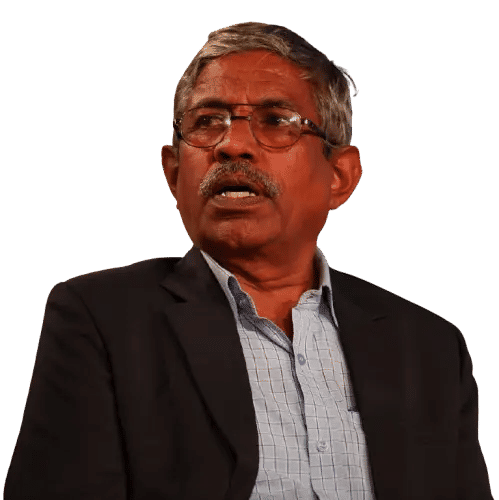
About the Author
Rai Singh Dahiya
Founder & Chief Innovator, Enersol Biopower Pvt. Ltd.
Grassroots innovator and recipient of India's Fifth National Grassroots Innovation Award (2009). Selected as Innovation Scholar-in-Residence at Rashtrapati Bhavan (2015). Over 25 years of experience pioneering clean biomass energy solutions deployed at IITs, NITs, and in UNDP international projects across Africa and the Middle East.