

Using Biomass Gasifiers for Process Heat, Not Just Electricity
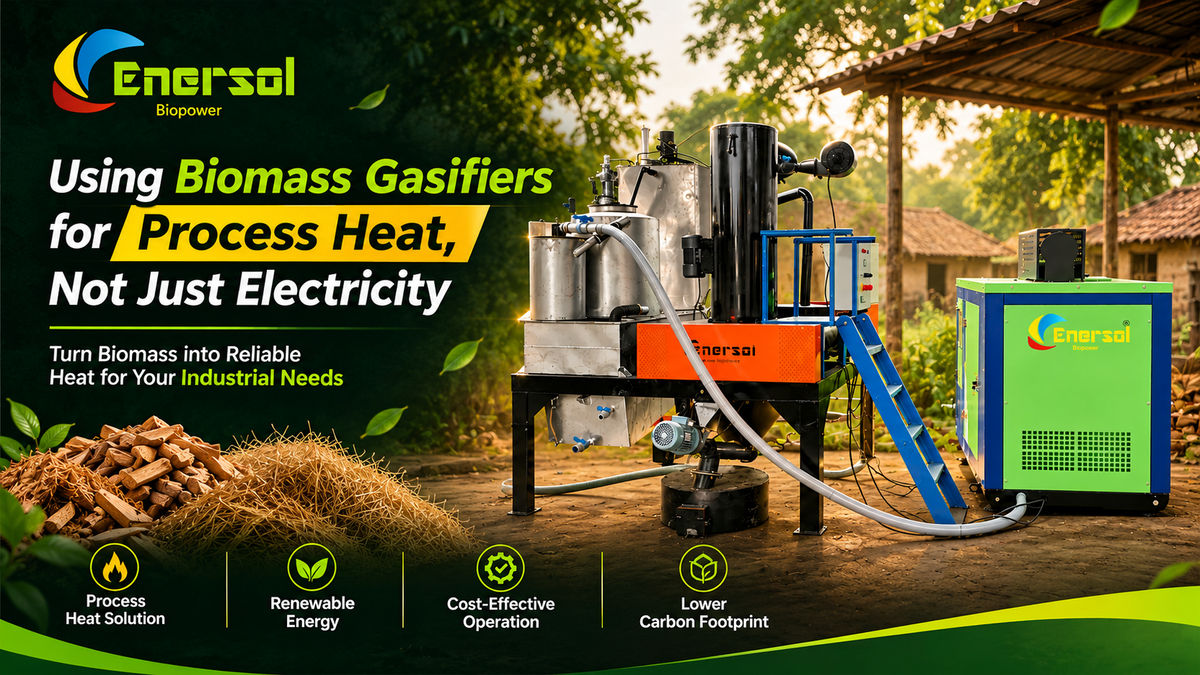
A thermal biomass gasifier sends producer gas straight to a burner, so it can replace LPG, diesel or furnace oil in dryers, furnaces and boilers. For units that mainly need heat, this is usually a better use of biomass than making electricity first.
By Rai Singh Dahiya, Founder, Enersol Biopower | Published 6 October 2026
Key Article Highlights
- Burning gas directly delivers far more usable heat than turning it into electricity first
- Thermal gasifiers are sized in kcal/hr, from your peak hourly heat demand
- Enersol's thermal range covers 10,000 to 5,00,000 kcal/hr
- LPG burners usually cannot run on producer gas without a change of burner and gas line
- Food dryers should normally use a heat exchanger to keep flue gas away from the product
Why Direct Heat Makes More Sense
When people think of gasifiers, they think of electricity. But many small factories use most of their energy as heat, for drying, roasting, boiling or melting.
Making electricity is a two-stage loss. The engine turns only part of the gas energy into power, and most of the rest leaves as waste heat. If you then use that electricity for heating, you have taken the long way round.
A thermal gasifier skips the engine. As a rough estimate, one kilogram of biomass can deliver two to three times more usable heat this way than it would as electricity. There is also no engine to service, which removes a large part of the maintenance work.
How a Thermal Gasifier Works
Which Industries Can Use Gasifier Heat?
Gasifier heat works best in processes that run for steady hours and already burn a purchased fuel. These are some of the best-fitting applications.
1. Spice and Grain Drying
Drying is mostly a steady, low-temperature job, which suits a gasifier well. Many of these units also have their own husk or stalks available as fuel. Use a heat exchanger so that clean hot air reaches the product.
2. Papad and Food Processing
Papad, namkeen and similar units need reliable heat for drying, roasting and frying. Hot-air systems and thermic-fluid heaters can keep the flame separate from the food. Check your food safety requirements before you finalise the design.
3. Small Textile Units
Dyeing and finishing units need hot water, steam and hot air for long hours. A gasifier can supply a boiler or hot-air generator and replace purchased fuel in those steps.
4. Furnaces and Kilns
Producer gas can fuel furnaces and kilns, but temperature matters here. Share your target temperature early, because high-temperature processes need a closer design check.
5. Tea Withering and Drying
Tea processing needs large amounts of consistent heat in peak season. Our agro-industry cost guide covers how estates approach this.
How to Size a Thermal Gasifier
Power gasifiers are chosen by kW, as shown in our biomass gasifier range. Thermal gasifiers are chosen by kcal/hr, and the easiest place to start is the fuel you burn today.
Take a dryer that burns 8 kg of LPG an hour at its busiest. These numbers are illustrative, so use your own. LPG has about 11,000 kcal/kg, which gives a demand of about 88,000 kcal/hr.
Keep some headroom, generally 10–15%, for fuel quality and peak periods. That gives about 1,00,000 kcal/hr, so the ESB-R T100k is the natural starting point.
| Model | Heat Rating (kcal/hr) | Approx. Gas Flow | LPG Equivalent | Diesel Equivalent |
|---|---|---|---|---|
| ESB-R T10k | 10,000 | 8–10 Nm³/hr | 0.9 kg/hr | 1.1 L/hr |
| ESB-R T50k | 50,000 | 42–50 Nm³/hr | 4.5 kg/hr | 5.6 L/hr |
| ESB-R T100k | 1,00,000 | 83–100 Nm³/hr | 9.1 kg/hr | 11 L/hr |
| ESB-R T200k | 2,00,000 | 167–200 Nm³/hr | 18 kg/hr | 22 L/hr |
| ESB-R T500k | 5,00,000 | 417–500 Nm³/hr | 45 kg/hr | 56 L/hr |
Calculated from heat content, using 1,000–1,200 kcal/Nm³ for producer gas, 11,000 kcal/kg for LPG and 9,000 kcal/litre for diesel. These are planning estimates, not model specifications.
What Does the Heat Cost?
The fairest way to compare fuels is the cost of 1,000 kcal of heat. For biomass, we assume fuel of 3,600 kcal/kg and about 70% gasification efficiency, which gives about 2,500 kcal per kg.
| Fuel | Example Price | Heat Used | Fuel Cost per 1,000 kcal |
|---|---|---|---|
| Commercial LPG | ₹2,078 per 19 kg cylinder | 11,000 kcal/kg | About ₹9.9 |
| Diesel | ₹85–95 per litre | 9,000 kcal/litre | About ₹9.4–10.6 |
| Biomass through gasifier | ₹1.50–4 per kg | 2,500 kcal/kg of gas energy | About ₹0.6–1.6 |
For our example dryer, 8 kg of LPG an hour for 8 hours costs about ₹7,000 a day. The same heat needs about 280 kg of biomass, which costs about ₹420–₹1,120 a day.
This table compares fuel cost only. It leaves out equipment cost, labour, power for blowers, maintenance and fuel handling. Prices also change, so replace them with your local rates before you calculate your payback.
What to Check Before You Switch
Switching Checklist
- Burner: Producer gas has about 1,000–1,200 kcal/Nm³, so it needs a much larger flow than LPG. Plan for a burner and gas line made for it.
- Temperature: Note the temperature your process needs and how tightly it must be held.
- Direct or indirect heat: Decide whether flue gas can touch your product, or whether you need a heat exchanger.
- Heat control: Check how quickly your process changes demand, and how the system will follow it.
- Fuel: At 280 kg a day, the example dryer needs 7–8 tonnes a month over 26 days. Plan dry, covered storage. Fuel moisture should stay below 20%.
- Backup: Keep your existing fuel system ready, at least until the new one has proved itself.
- Safety: Producer gas contains carbon monoxide. Plan ventilation, a carbon monoxide alarm and flame failure protection. Read our troubleshooting and maintenance guide for more.
A thermal gasifier is not always the right answer. If you mainly need electricity, a power gasifier fits better. If your waste is wet, such as cow dung or food waste, look at a biogas system instead.
Frequently Asked Questions
Can a biomass gasifier be used for heating?
Yes. A thermal biomass gasifier sends producer gas to a burner instead of an engine. The flame can then supply heat to a dryer, furnace, boiler or similar process. Enersol's thermal range covers 10,000 to 5,00,000 kcal/hr.
How do I size a thermal biomass gasifier?
Multiply your peak hourly fuel use by the heat content of that fuel. For example, 8 kg of LPG an hour at about 11,000 kcal/kg needs about 88,000 kcal/hr. Then choose a model with some headroom, such as 1,00,000 kcal/hr.
Can I use my LPG burner with producer gas?
Usually not. Producer gas has about 1,000–1,200 kcal/Nm³, far less energy by volume than LPG, so the same heat needs a much larger gas flow. You will normally need a burner and gas line designed for producer gas.
How much biomass does a thermal gasifier use?
As a planning estimate, fuel of 3,600 kcal/kg at about 70% gasification efficiency gives about 2,500 kcal of gas energy per kg. A demand of 88,000 kcal/hr would then need about 35 kg of biomass an hour. Actual use depends on the fuel, moisture and system.
Is gasifier heat safe for food drying?
It can be, but the combustion gases should not touch the food unless the process has been approved for it. Most food dryers should use a heat exchanger, which delivers clean hot air and keeps the flue gas separate from the product.
Can one gasifier supply both heat and electricity?
A power gasifier can supply heat as well as electricity, but it is designed around the engine's gas requirement. If you need both, give your supplier your kW load and kcal/hr demand together, along with the hours each one runs.
Replace Your LPG or Diesel Heat
Tell us what you heat, the temperature you need, the fuel you burn each hour and your running hours. Our team will help you find the right thermal gasifier.
Get a Free Quote →
Recipient of India's Fifth National Grassroots Innovation Award (2009), invited as Innovation Scholar-in-Residence at Rashtrapati Bhavan (2015). Over 25 years of experience designing biomass energy technology for rural India.